Learn how Palworld Breeding Eggs work, how to get breeding eggs, hatch them, predict offspring, use Passive Skills, and understand mutation breeding.
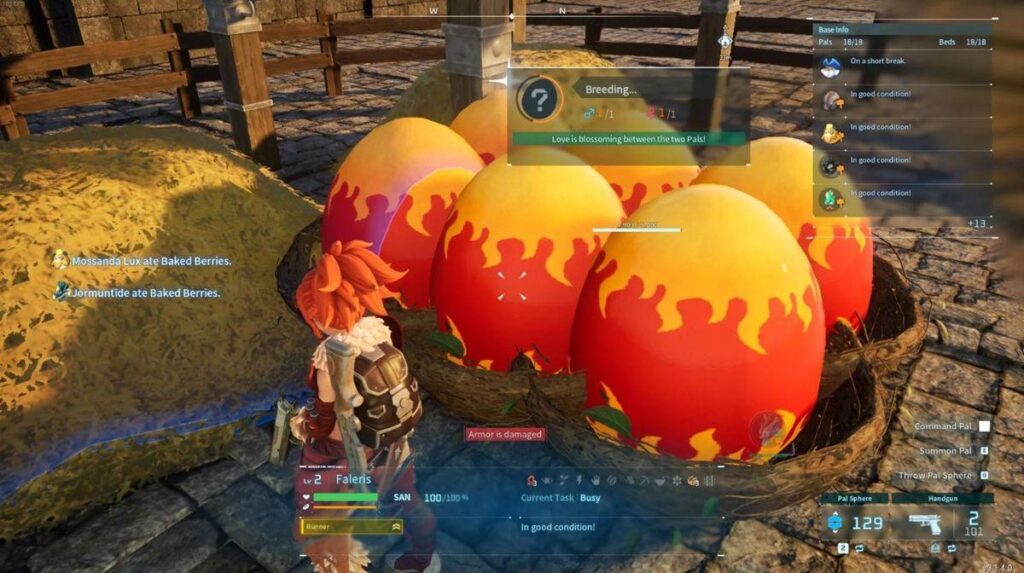
A Palworld Breeding Egg is the egg produced when two Pals are bred at the Breeding Farm. The resulting egg can be placed in an Egg Incubator and hatched to obtain a Pal.
Breeding Eggs are the central output of the Palworld breeding system. They connect breeding parents, offspring prediction, Passive Skills, breeding combinations, and Mutation into a single progression:
Breeding Parents → Breeding Egg → Incubation → Pal Offspring
Understanding how Palworld Breeding Eggs work makes it easier to plan specific Pal breeding projects and multi-generation breeding chains.
What Is a Palworld Breeding Egg?
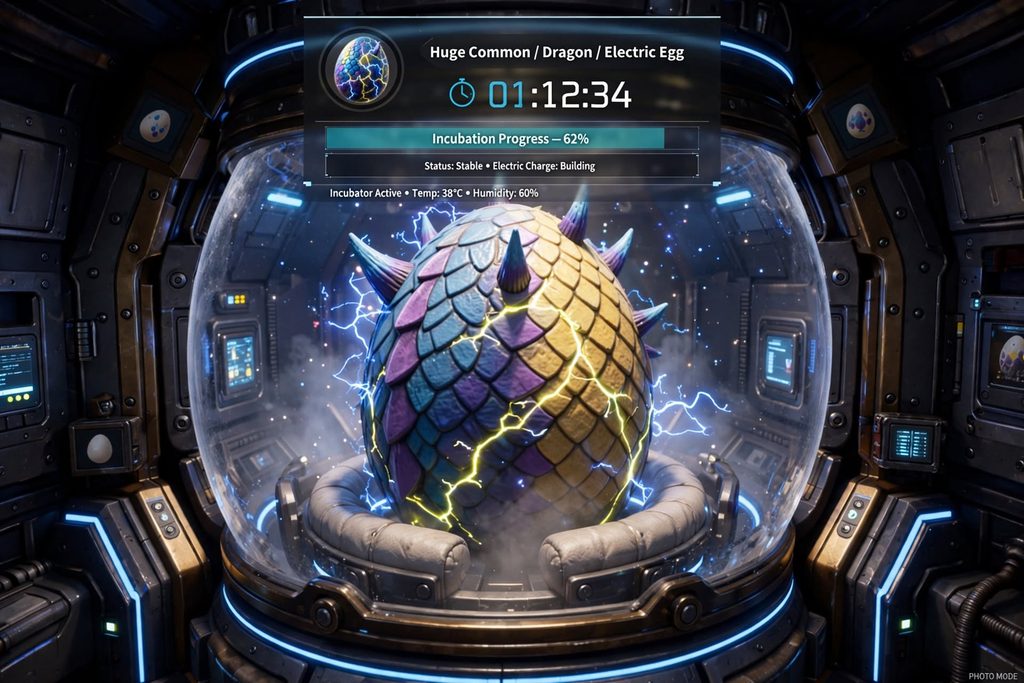
A Palworld Breeding Egg is an egg generated through the breeding process.
When two compatible Pals are assigned to a Breeding Farm, the breeding process can produce an egg. That egg can then be placed inside an Egg Incubator.
The basic process is:
Parent Pal A + Parent Pal B → Breeding Egg → Egg Incubator → Offspring Pal
The Breeding Egg therefore acts as the connection between the parent Pals and the resulting offspring.
How Do You Get a Breeding Egg in Palworld?
To obtain a Breeding Egg, you need to use the Palworld breeding system.
The general process is:
- Build or access a Breeding Farm.
- Select two Pals as breeding parents.
- Provide the required breeding resources.
- Allow the breeding process to produce an egg.
- Collect the resulting Breeding Egg.
- Place the egg in an Egg Incubator.
- Hatch the egg to obtain the Pal.
The important distinction is that breeding produces the egg, while incubation produces the hatched Pal.
Palworld Breeding Egg and Parent Pals
The parents are an important part of determining the resulting breeding outcome.
A simplified relationship is:
Parent A + Parent B → Egg → Offspring
When breeding for a particular Pal, you should therefore determine the appropriate parent combination before producing the egg.
This is why Palworld breeding combinations and Breeding Eggs are closely connected.
For example:
Parent A + Parent B
↓
Breeding Egg
↓
Target Pal
A breeding calculator can help identify the parent combination required for a target offspring.
Does Every Breeding Egg Produce the Same Pal?
The result of a Breeding Egg depends on the breeding combination that created it.
Different parent combinations can produce different offspring.
This means the egg should not be viewed independently from its parents.
The complete breeding relationship is:
Parents → Breeding Combination → Egg → Offspring
If your goal is to obtain a specific Pal, start by identifying the correct parent combination.
Palworld Breeding Egg Types
Breeding Eggs can be discussed according to their role in the breeding system.
Normal Breeding Egg
A normal Breeding Egg follows the expected result of the selected parent combination.
The progression is:
Parent Combination → Normal Egg → Expected Offspring
Mutated Egg
With the Palworld 1.0 Mutation system, an egg can also enter a mutation outcome.
The progression becomes:
Parent Combination → Mutation → Mutated Egg → Mutation Pal
Mutation introduces a separate breeding outcome and can produce a different Pal with special characteristics and mutation-related Passive Skills.
Palworld Breeding Egg and Egg Incubator
After obtaining a Breeding Egg, the next step is incubation.
The Egg Incubator is used to hatch the egg and reveal the resulting Pal.
The overall progression is:
Breeding Farm
↓
Breeding Egg
↓
Egg Incubator
↓
Hatched Pal
The incubator therefore does not replace the breeding process. It is the second stage after the egg has already been created.
How Long Does a Palworld Breeding Egg Take to Hatch?
The time required to hatch an egg can depend on the egg and incubation conditions.
For breeding planning, it is useful to distinguish between:
- Breeding time: time required to produce the egg
- Incubation time: time required to hatch the egg
These are separate stages.
A breeding project can therefore be represented as:
Parent Selection → Breeding Time → Egg → Incubation Time → Pal
This distinction is useful when calculating the total time required for multiple breeding generations.
Palworld Breeding Egg Size
Palworld eggs can have different sizes, and egg size is relevant when discussing the hatching stage.
However, when the goal is a specific bred Pal, the parent combination and breeding result remain the primary considerations.
For a breeding guide, keep these concepts separate:
Egg Size → Incubation Characteristics
Parent Combination → Breeding Result
This prevents egg size from being confused with the parent combination that produced the egg.
Palworld Breeding Egg Calculator
A Palworld Breeding Egg Calculator can help players determine what offspring can result from different parent combinations.
Depending on the calculator, it may allow you to search for:
- Parent Pals
- Target offspring
- Breeding combinations
- Breeding chains
- Egg results
- Passive Skill inheritance
- Mutation possibilities
A useful workflow is:
Target Pal → Find Parents → Produce Egg → Hatch Egg
This is more efficient than randomly testing parent combinations.
Palworld Breeding Egg and Offspring Prediction
Breeding Eggs are closely connected to offspring prediction.
Before producing an egg, players can use the parent combination to determine the expected offspring.
The planning structure is:
Parent A + Parent B → Predicted Offspring → Breeding Egg → Hatched Pal
This allows you to determine whether the selected parents are suitable before investing resources into the breeding attempt.
For a larger breeding project, offspring prediction can also be used to plan multiple generations.
Palworld Breeding Egg and Passive Skills
The Breeding Egg is also part of Passive Skill breeding.
When two parents are selected, their Passive Skills can become part of the breeding strategy for the resulting offspring.
The objective can therefore be:
Target Pal + Desired Passive Skills
instead of simply:
Target Pal
This creates a more advanced breeding workflow:
Choose Parents → Produce Egg → Hatch Offspring → Check Passive Skills
If the result does not contain the desired Passive Skill combination, the Pal can potentially be incorporated into another breeding generation.
Palworld Breeding Egg and Mutation
Mutation adds another layer to the Breeding Egg system.
A normal breeding project follows:
Parents → Normal Egg → Normal Offspring
A mutation breeding project can follow:
Parents → Mutation Chance → Mutated Egg → Mutated Pal
This means the egg is the point where the normal breeding path and mutation path can diverge.
Mutation-focused breeding is especially relevant to players searching for rare Passive Skills and unusual breeding outcomes.
Palworld Breeding Egg and Breeding Chains
A Breeding Egg can also represent one stage in a multi-generation breeding chain.
For example:
Parent A + Parent B → Egg → Pal C
Then:
Pal C + Parent D → Egg → Pal E
Finally:
Pal E + Parent F → Egg → Target Pal
This creates a complete breeding chain.
The important relationship is:
Egg → Offspring → New Parent → New Egg → Next Offspring
This is how Breeding Eggs connect individual breeding attempts into larger breeding projects.
How to Plan a Palworld Breeding Egg Project
A planned breeding project should begin with the final target.
Step 1: Choose the Target Pal
Determine the Pal you want to obtain.
Step 2: Find the Parent Combination
Identify which two Pals can produce the target.
Step 3: Check Passive Skills
If the final Pal requires particular Passive Skills, include them in the breeding plan.
Step 4: Identify Missing Parents
If you do not have one of the required parents, determine whether it can be produced through another breeding combination.
Step 5: Produce the Breeding Egg
Use the selected parents at the Breeding Farm.
Step 6: Incubate the Egg
Place the Breeding Egg into an Egg Incubator.
Step 7: Check the Offspring
After hatching, check the species and Passive Skills.
Step 8: Continue the Breeding Chain
If the result is an intermediate Pal, use it as a parent for the next generation.
Palworld Breeding Egg Efficiency
Breeding efficiency depends on how effectively you plan each egg.
Instead of producing random eggs, organize the breeding project around a target.
A simple efficiency model is:
Target → Parent Combination → Egg → Offspring → Next Step
This reduces unnecessary breeding attempts and makes multi-generation projects easier to manage.
Players working on rare Passive Skill combinations can also keep track of useful offspring instead of treating every non-target result as wasted.
Common Palworld Breeding Egg Mistakes
Choosing Random Parents
Random parent selection can produce an unexpected result.
Start with the target Pal and work backward toward the required parents.
Confusing the Egg With the Offspring
The Breeding Egg is the intermediate item. The Pal is obtained after incubation.
Ignoring Passive Skills
If your goal is a specialized Pal, the species alone may not be enough.
Forgetting Breeding Chains
A non-target offspring can sometimes become a useful intermediate parent.
Treating Mutation as Normal Breeding
Mutation is a separate outcome within the breeding system and should be considered separately from the normal parent combination.
Ignoring Incubation
Producing an egg is only the first stage. The egg must still be incubated before the offspring is obtained.
Palworld Breeding Egg FAQ
What is a Palworld Breeding Egg?
A Palworld Breeding Egg is the egg produced by breeding two Pals at the Breeding Farm. It can then be placed in an Egg Incubator to hatch the offspring.
How do I get a Breeding Egg?
Place two suitable breeding parents at the Breeding Farm and complete the breeding process to produce an egg.
What happens after I get a Breeding Egg?
Place the egg in an Egg Incubator. After incubation, the egg hatches into the resulting Pal.
Do the parents determine the Breeding Egg?
The parent combination determines the breeding result associated with the egg. Different combinations can produce different offspring.
Can a Breeding Egg mutate?
Under the Palworld 1.0 Mutation system, a breeding egg can enter a mutation outcome, producing a Mutated Egg and potentially a different Pal.
Can Breeding Eggs inherit Passive Skills?
Passive Skills are part of the breeding outcome and can be considered when planning the parents for a breeding project.
Can a Breeding Egg be part of a breeding chain?
Yes. The Pal that hatches from one egg can become a parent in a later generation, creating a multi-step breeding chain.
Is a Breeding Egg the same as a wild Pal Egg?
No. A Breeding Egg is generated through the breeding system, while wild eggs are obtained through exploration and other game-world activities.
Can a breeding calculator predict the egg result?
A breeding calculator can help identify the expected offspring from a parent combination and can therefore be used to plan which breeding egg to produce.
Final Thoughts
The Palworld Breeding Egg is the central intermediate stage between parent selection and the final Pal.
The complete breeding flow is:
Breeding Parents → Breeding Combination → Breeding Egg → Egg Incubator → Offspring
Advanced breeding adds additional layers:
Breeding Egg → Passive Skills → Breeding Chain
and:
Breeding Egg → Mutation Chance → Mutated Egg → Mutation Pal
Understanding this structure makes it easier to plan specific Pals, organize breeding combinations, transfer desirable Passive Skills, and build multi-generation breeding routes.